

Few household problems are as disruptive as a slow or blocked drain. One moment the kitchen sink empties normally, and the next you’re standing in a few inches of gray water, wondering what went wrong. The good news is that most drain trouble is predictable, and much of it is preventable once you understand what happens inside your pipes.
Clogs rarely appear overnight. According to a Jetterman Plumbing-Drain Specialist, blockages usually form gradually as grease, soap residue, hair, and debris cling to pipe walls and narrow the passage a little more each day. By the time water backs up, the pipe may already be mostly obstructed.
Understanding how this buildup works helps you spot early warning signs, choose sensible fixes, and avoid habits that quietly damage your plumbing. Water conservation matters here too, since leaks and sluggish fixtures waste far more than most people realize. The U.S. Environmental Protection Agency’s WaterSense program offers useful guidance on efficient water use at home.
What Actually Causes Drain Clogs?
Different rooms produce different kinds of blockages. Here is a quick comparison:
| Location | Most Common Culprits | Typical Warning Sign |
|---|---|---|
| Kitchen sink | Grease, food scraps, coffee grounds | Slow draining, greasy smell |
| Bathroom sink | Hair, toothpaste, soap scum | Pooling water, gurgling |
| Shower or tub | Hair, body oils, soap film | Standing water at your ankles |
| Toilet | Excess paper, wipes, foreign objects | Weak flush, rising bowl level |
| Main sewer line | Tree roots, collapsed pipe, heavy buildup | Multiple fixtures draining slowly |
Notice that the main sewer line behaves differently from the rest. When only one fixture is slow, the problem is usually local. When several drains misbehave at once, the blockage is probably deeper in the system.
Early Warning Signs You Shouldn’t Ignore
Your plumbing usually sends signals before a full blockage. Watch for:
- Gurgling sounds from drains or toilets, which suggest trapped air struggling past an obstruction
- Slow drainage that gets gradually worse over weeks
- Persistent odors that return even after cleaning the drain opening
- Water appearing in unexpected places, such as a shower filling when the washing machine drains
- Frequent clogs in the same fixture, which often point to buildup further down the line
Catching these signs early typically means a simpler, cheaper fix.
Everyday Habits That Protect Your Pipes
Prevention is mostly about small, consistent choices. Think of it as a short routine rather than a chore list.
- Scrape plates into the trash or compost, not down the sink.
- Collect cooking grease in a jar and throw it away once it solidifies. Grease coats pipes as it cools.
- Install mesh strainers over shower, tub, and sink drains to catch hair.
- Flush only toilet paper. Even products labeled “flushable” often fail to break down quickly.
- Flush drains monthly with hot (not boiling) water to help move soap residue along.
- Run cold water while using a garbage disposal so fats stay solid enough to be chopped and carried away.
Boiling water can soften or damage PVC pipes and joints, so hot tap water is the safer choice.
DIY Fixes: What Works and What Doesn’t
Some home remedies are genuinely useful, while others cause more problems than they solve.
Worth trying:
- A cup plunger for sinks and a flange plunger for toilets
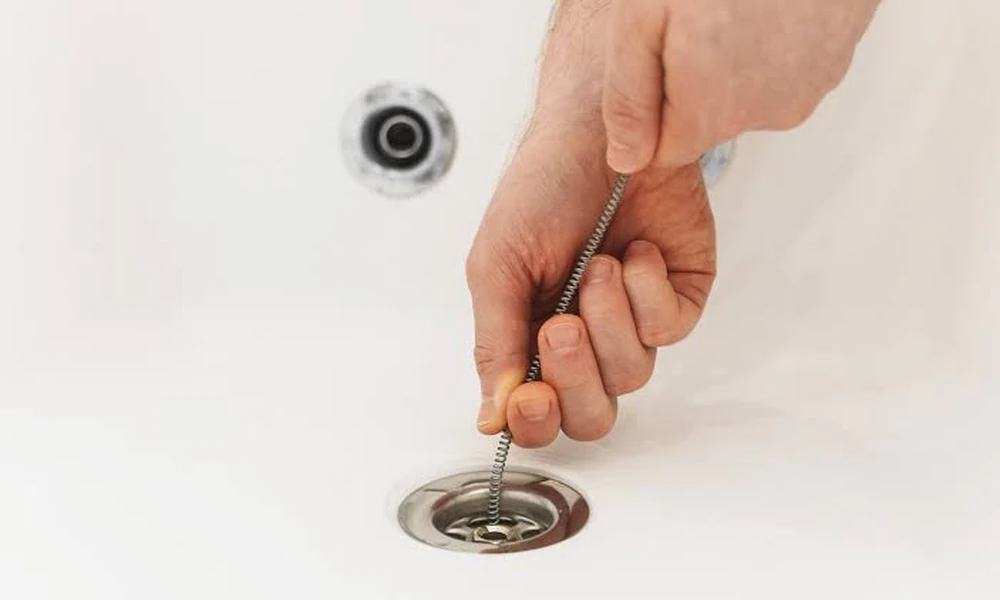
- A small drain snake or hair-removal tool for shower clogs
- Cleaning out the P-trap beneath the sink (place a bucket underneath first)
Use caution:
- Chemical drain cleaners are harsh and can corrode older pipes. They can also be dangerous if they splash on skin or mix with other products. If one fails to clear a clog, the standing water becomes a hazard for whoever works on it next.
- Baking soda and vinegar make a satisfying fizz, but they rarely dislodge serious blockages. They’re better for freshening drains than clearing them.
If a plunger and a basic snake don’t solve the problem, repeated attempts can push the clog deeper or damage the pipe. That is a good moment to bring in someone with proper equipment.
How Professionals Clear Stubborn Blockages
Plumbers have several tools that go well beyond what a household has on hand:
- Motorized augers cut through tough obstructions such as dense hair mats or small roots.
- Camera inspection lets a technician see inside the pipe, locating cracks, offsets, or root intrusion without guesswork.
- Hydro jetting uses high-pressure water to scour pipe walls. Unlike snaking, which punches a hole through a clog, jetting removes the buildup that caused it, which is why it’s often chosen for recurring grease problems.
Which method fits depends on the pipe material, its age, and the nature of the blockage. A camera inspection first is often the most sensible step, since it replaces assumptions with evidence.
Don’t Forget the Septic System
Homes not connected to a municipal sewer rely on a septic system, which has its own care requirements. Regular pumping, careful water use, and avoiding harsh chemicals all help prevent failures that are costly to repair. The EPA’s septic systems resource page explains how these systems work and how to maintain them properly.
Common Questions About Drains
Why does my drain smell even after I clear it?
Odors often come from biofilm, a slimy layer of bacteria and organic matter inside the pipe or trap. Thorough cleaning, not just air freshener, is needed.
Are tree roots really a threat to pipes?
Yes. Roots seek moisture and can enter through tiny cracks or loose joints, eventually forming dense masses inside sewer lines. Older clay and cast-iron pipes are especially vulnerable.
How often should drains be professionally cleaned?
There is no universal schedule. A household with long hair, heavy cooking, or older pipes may benefit from periodic maintenance, while a newer home with careful habits may go years without needing it.
Can a slow drain fix itself?
Almost never. Buildup tends to accumulate, so a slow drain is typically a clog in progress.
When to Call for Help
Handle small clogs yourself, but consider professional help if you notice any of the following:
- Multiple fixtures backing up at once
- Sewage odors or water bubbling up in floor drains
- A clog that returns within days of being cleared
- Damp patches or unusually green, lush grass over a buried line
- Signs of water damage on walls or floors
Acting early limits both the repair cost and the mess.
The Takeaway
Drains are easy to ignore until they fail, but they respond well to modest, regular attention. Keep grease, wipes, and hair out of the pipes, notice small changes in how water moves, and treat chemical cleaners as a last resort rather than a first reflex. When a blockage resists simple tools, understanding the options, from augers to cameras to hydro jetting, helps you make informed decisions instead of rushing into repeated, ineffective fixes.
